
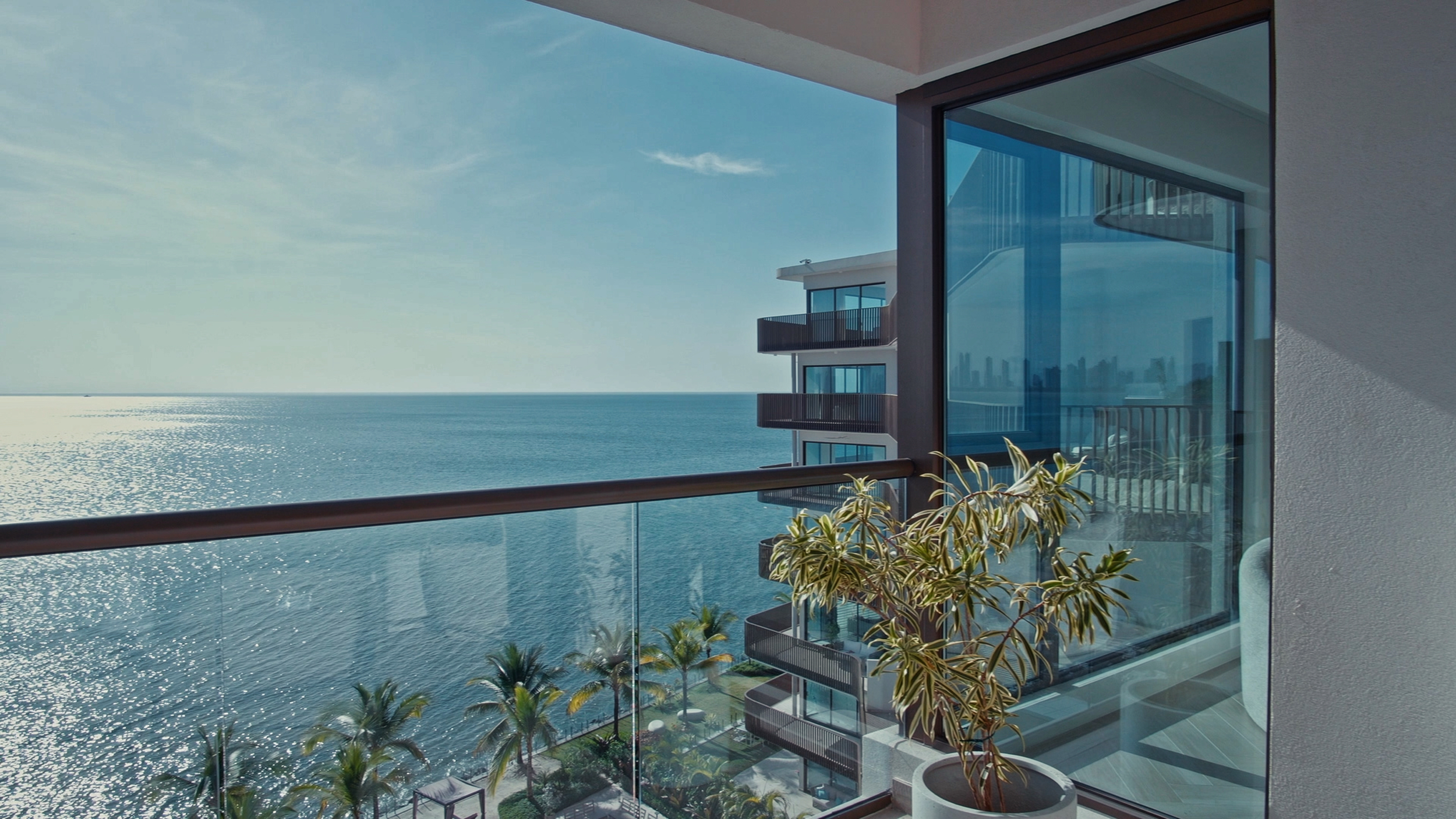
A buyer-focused guide to Panama’s luxury property markets, residency pathways and practical appeal for North Americans planning a move, second home or long-term investment.
For U.S. and Canadian buyers, the country combines a U.S.-dollar economy, international air connectivity, modern private healthcare, established residential communities and several distinct versions of luxury living. A buyer can choose a waterfront tower in Panama City, a golf-community residence, a managed beach property or a cooler-climate home in the highlands without leaving the same national market.
That range is more than a lifestyle advantage. It creates multiple ways to use real estate: as a primary residence, a seasonal base, a long-term hold, a rental asset or when correctly structured part of a broader residency plan.
Panama should not be reduced to a low-cost retirement story or a visa headline. Its stronger proposition is optionality: a globally connected country where real estate can support the way a buyer actually intends to live.
Why Panama Feels Familiar Without Feeling Ordinary
The transition to Panama can feel relatively intuitive for buyers arriving from the United States or Canada. The U.S. dollar circulates alongside the balboa at parity, international brands and services are widely available, and Panama City operates as a regional center for finance, logistics, healthcare and multinational business.
Yet Panama does not feel like a copy of North America. The capital rises along the Pacific, the Canal shapes the country’s global identity, tropical coastlines are reachable by car or short flight, and the highlands offer a markedly different climate and pace.
For a property buyer, this balance matters. Familiar financial reference points can make prices and carrying costs easier to evaluate, while Panama’s varied geography gives the purchase a clear lifestyle purpose.
A Real Estate Market With More Than One Version of Luxury
The best place to buy in Panama depends less on a national ranking than on the buyer’s intended use. A residence chosen for executive relocation should not be evaluated by the same criteria as a resort condominium or a legacy waterfront property.
Panama City: Urban Convenience and International Demand
- Panama City offers the country’s deepest concentration of luxury apartments, new developments, private healthcare, restaurants, schools and business infrastructure. It is often the most practical entry point for buyers who want a residence that is easy to reach, maintain and use throughout the year.
- Punta Pacífica is known for established waterfront towers and proximity to Multiplaza and private healthcare. Costa del Este offers a more master-planned environment with broad avenues, office districts and family-oriented residential towers. Santa María centers the experience around a gated golf community. Ocean Reef Islands occupies a rarer category: private-island living with marina access beside the city. Casco Viejo appeals to buyers drawn to historic architecture, boutique inventory and a more walkable cultural setting.
- These neighborhoods compete for different buyers. The investment question is therefore not simply whether Panama City is attractive, but which submarket and building align with the owner’s time horizon, rental strategy and expectations for resale.
The Pacific Coast: Second Homes With a Clear Use Case
- Along the Pacific corridor, communities such as Coronado and the resort areas around Río Hato and Buenaventura appeal to buyers who want beach access without disconnecting completely from the capital. Inventory may include condominiums, villas, golf-oriented homes and managed residences with hospitality-style amenities.
- For investors, management quality matters as much as the view. Rental rules, seasonality, maintenance, beach access, reserve funds and the operator’s track record can determine whether a resort property performs as an asset or functions primarily as a lifestyle purchase.
The Highlands: Climate, Space and Long-Stay Appeal
- Boquete and El Valle de Antón provide a different proposition: cooler temperatures, greenery, lower density and communities that often attract retirees and long-stay residents. These markets may be compelling for buyers seeking a primary home or extended seasonal use rather than a lock-and-leave city apartment.
- Site-specific diligence becomes especially important outside the capital. Road access, drainage, utilities, internet service, construction quality, land boundaries and proximity to healthcare should all be tested rather than assumed.
The Caribbean and Islands: Scarcity With More Variables
- Bocas del Toro, the Pearl Islands and other waterfront settings can offer privacy and genuine scarcity. They can also introduce more complexity around access, infrastructure, marine exposure, title and property management.
- The more exceptional the setting, the more carefully the ownership structure and everyday usability should be reviewed. A view may create desire; reliable access and clean documentation protect value.
| Market | Best suited to | Typical opportunities |
| Panama City | Urban luxury, executive relocation, lock-and-leave ownership | Established tower resales, new developments, waterfront and golf-community residences |
| Pacific coast | Beach access, resort amenities, second-home use | Condominiums, villas and managed resort residences |
| Highlands | Cooler climate, lower density, long-stay living | Homes, townhomes and select land opportunities |
| Caribbean and islands | Privacy, boating, distinctive lifestyle | Waterfront homes and scarce boutique inventory requiring careful access and title review |
What Real Estate Opportunities Appeal to North American Buyers?
Panama’s opportunity is not limited to one property type. U.S. and Canadian buyers can approach the market through several distinct strategies.
- Established luxury resales. Completed residences may offer immediate occupancy, larger layouts, a visible maintenance history and real operating-cost data.
- New developments. Newer projects can provide current design, updated amenities and early-phase selection, but require careful review of the developer, contract, delivery schedule and payment structure.
- Waterfront scarcity. Oceanfront, marina-oriented and island properties may hold strong lifestyle appeal, but value depends on actual access, protected views, marine maintenance and finite supply—not the word “waterfront” alone.
- Relocation-ready homes. Properties near schools, healthcare, work centers and everyday services may serve a broader owner-occupant and long-term-rental audience.
- Resort and second-home residences. Managed communities can simplify ownership from abroad, provided fees, rental programs, personal-use restrictions and operating standards are understood before purchase.
The strongest purchase is usually the one with more than one credible exit or use. A residence that can serve the owner, attract a defined tenant profile and appeal to future buyers is generally more resilient than a property dependent on a single optimistic assumption.
Can Buying Real Estate Support Panama Residency?
Potentially purchasing property and obtaining residency are separate legal processes. Real estate can support certain immigration categories when the investment, source of funds, title and application are structured to meet the program’s current rules.
Qualified Investor Program
As of August 2026, the real-estate route under Panama’s Qualified Investor Program begins at US$300,000 in qualifying property acquired with foreign-source funds. The program can lead directly to permanent residency after approval, and the qualifying investment is generally required to be maintained for five years.
The connection to real estate is active, not incidental. Panama’s Ministry of Commerce and Industries reported that real estate represented 87.3% of the qualified-investor certificates issued from July 2025 through June 2026. For buyers already planning a substantial acquisition, the program can make ownership and residency part of one coordinated strategy.
Friendly Nations Route
Eligible citizens, including Americans and Canadians—may also consider the Friendly Nations category. A qualifying real estate investment can support the application under current rules, with a provisional period before permanent residency. This route has different thresholds, timing and documentation from the Qualified Investor Program and should not be treated as interchangeable with it.
Pensionado Program
The Pensionado program is based primarily on a qualifying lifetime pension rather than a property purchase. It may be relevant to retirees who want to own a home in Panama, but the residence itself is not what creates eligibility. The National Immigration Service currently identifies a minimum pension of US1,000permonth,withalowerUS750 threshold in a specified property-ownership scenario.
Residency rules can change, and a purchase contract should never be signed on the assumption that a particular immigration outcome is automatic. The immigration attorney and real estate adviser should coordinate before funds are committed—not after closing.
Why the 2026 Expat Ranking Matters to Real Estate
In the 2026 InterNations Expat Insider survey, Panama ranked first overall for the third consecutive year. It also placed first for Personal Finance and Working Abroad, second for Ease of Settling In and Expat Essentials, and first in the Housing subcategory. Eighty-seven percent of respondents in Panama said they were happy with life abroad.
A survey is not a property forecast, but it provides useful context. Real estate demand becomes more durable when a country works in everyday life when newcomers can find housing, settle in, manage costs and build a routine.
For investors, that does not mean every residence will appreciate or rent easily. It means Panama has a livability foundation that can support owner-occupant, relocation and long-stay demand across several markets. The property still has to earn its place within that larger story.
Is Panama a Good Real Estate Investment for U.S. and Canadian Buyers?
Panama offers several demand drivers that North American buyers tend to value: a dollar-based economy, proximity to major home markets, a globally important logistics position, established private services, diverse lifestyle destinations and residency pathways connected to investment.
Those conditions create the foundation. They do not replace property-level underwriting. In Panama, as in any international market, returns depend on the building, acquisition price, fees, financing, vacancy, rental restrictions, management, taxes, legal structure and eventual resale audience.
Tax Planning: Potentially Advantageous, Never Automatic
Panama generally applies a territorial tax system, meaning Panama-source income is the central focus of local taxation. That principle is often attractive to internationally mobile buyers, but it does not erase obligations in a person’s home country.
U.S. citizens generally remain subject to U.S. tax and reporting rules on worldwide income. Canadian outcomes depend heavily on tax residence and the ties maintained with Canada. Rental income, a future sale, ownership through a company and the movement of funds can all create separate reporting or tax consequences.
The practical approach is coordinated advice: Panamanian legal and tax counsel working alongside a U.S. or Canadian cross-border adviser before the ownership structure is finalized. Panama may be efficient, but efficiency is the result of planning rather than geography alone.
What Buyers Should Verify Before Purchasing
International buyers should evaluate the property, the building or community, and the legal structure as three separate layers of the same decision.
- Title and ownership. Confirm registered ownership, liens, boundaries, restrictions and whether the interest is titled property rather than a different form of possession.
- Building or community health. Review administration, reserve funds, insurance, maintenance history, pending assessments and the condition of shared areas.
- Rental rules. Verify minimum lease terms, short-term-rental restrictions, licensing requirements and any management agreement.
- Developer and contract. For new construction, assess delivery history, escrow or payment mechanics, specifications, completion remedies and what is contractually included.
- View and access. Determine whether a view can be affected by future development and whether road, beach, marina or utility access is legally and practically reliable.
- Residency alignment. Confirm that the property value, funds and closing sequence satisfy the intended immigration category before the transaction becomes irreversible.
Foreign buyers can generally acquire titled real estate in Panama, but coastal, island, border-area and rights-of-possession properties can require additional scrutiny. A locally licensed attorney should review the transaction independently.
Who Is Panama Best Suited For?
Panama is particularly relevant to:
- Relocation buyers who want modern services and several established residential districts within a globally connected capital.
- Second-home owners who value direct access from North America and a U.S.-dollar operating environment.
- Retirees seeking a warm-climate base, private healthcare and a formal pension-based residency option.
- Investors looking for city, resort, waterfront or long-stay rental demand rather than a single national property story.
- Globally mobile families and entrepreneurs who want real estate, residency and cross-border planning considered together.
It may be less suitable for buyers seeking a completely passive purchase without local management, legal coordination or market-specific diligence. Panama makes international ownership practical; it does not make every transaction simple.
Why Panama Continues to Stand Out
Panama’s advantage is not that it offers one perfect answer. It offers several credible ones.
A buyer can live in a waterfront city tower and reach private healthcare in minutes. Another can choose a beach residence designed for seasonal use. A retiree can prioritize climate and community in the highlands. An investor can focus on new development, established resale inventory or genuinely scarce waterfront property.
For U.S. and Canadian buyers, that range creates a more strategic kind of real estate decision: one in which the property can support lifestyle, capital allocation and long-term mobility at the same time.
Panama is most compelling when those goals are not treated as separate conversations. The right residence should work on the day of arrival, throughout the ownership period and when the time eventually comes to sell.
Victoria Levitam C., Managing Partner
Contact The Agency Panama to explore available homes and private real estate opportunities in Punta Pacífica.