
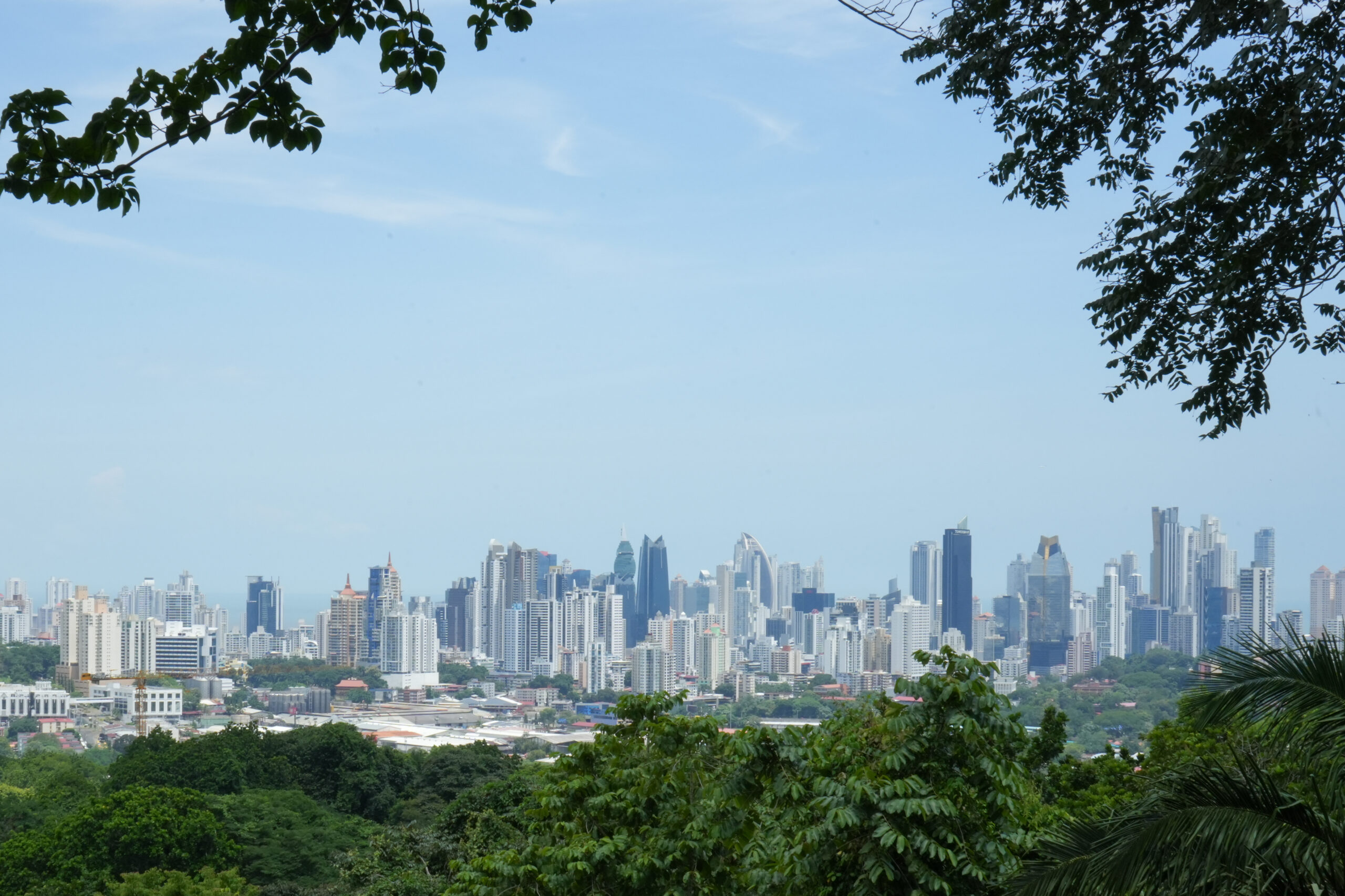
Panama has always known how to turn geography into leverage.
The Canal made that obvious.
Now the country is doing it again, this time with data, mobility, urban access, and a new generation of infrastructure designed to connect Panama more deeply to the rest of the Americas.
On August 11, 2026, Google announced Americas Connect, a network expansion that includes a new subsea cable system linking Panama with the Dominican Republic and Chile. The same initiative is designed to connect Panama onward to Google Cloud regions on the U.S. West Coast.
A cable landing is not a real estate development. It does not raise condominium values overnight.
What it does provide is validation.
Global infrastructure companies do not choose strategic network nodes casually. They choose locations that can support long-term capacity, resilience, investment, and regional relevance. Google’s decision places Panama inside a wider digital map at the same moment the country is advancing a public investment plan worth more than $30.3 billion.
For buyers, the important story is not one project. It is the accumulation of signals.
Why Does Google’s New Cable Matter to Panama?
The Alisios subsea cable system will connect Panama, the Dominican Republic, and Chile as part of Google’s Americas Connect initiative.
In the Pacific, the planned network creates multiple routes between Chile and Panama, with an additional link from Panama to the U.S. West Coast. In the Caribbean, Panama connects through the Dominican Republic toward U.S. East Coast infrastructure.
The technical purpose is stronger network capacity and resilience.
The strategic implication is larger.
Panama already occupies one of the world’s most valuable physical crossroads. The new cable extends that role into digital infrastructure. Ships have crossed here for more than a century. Increasingly, data will too.
For a real estate market, that kind of positioning can matter because it supports the conditions around demand: multinational activity, regional headquarters, professional relocation, new investment, and the need for high-quality housing in well-connected districts.
The cable is not the entire thesis. It is evidence that the thesis is becoming visible to global operators.
Panama’s $30.3 Billion Investment Plan
In December 2024, Panama’s Cabinet approved a five-year public investment plan totaling $30.3 billion through 2029.
The plan reaches across transportation, logistics, water, healthcare, education, tourism, and public services. Its major projects include the Panama–David–Frontera railway, the fourth bridge over the Canal, road rehabilitation, and other national infrastructure priorities.
The distinction matters: this is a government-approved investment program, not a developer’s projection or a marketing estimate.
It also does not mean every project is at the same stage.
Some projects are already under construction. Others remain in planning, engineering, or feasibility work. A credible real estate interpretation should preserve that difference rather than presenting the entire pipeline as completed or inevitable.
What the plan confirms is direction.
Panama is investing in the systems that move people, goods, water, information, and capital. Those systems shape where businesses locate, where residents can live more practically, and which corridors become easier to use over time.
The Metro and Bridge Are Changing the Meaning of Panama Oeste
For years, Panama Oeste has carried a familiar tradeoff: more space and newer residential growth, but difficult access to the capital during peak periods.
Metro Line 3 and the fourth bridge over the Panama Canal are designed to address that constraint from different angles.
Line 3 is under construction and will connect communities west of the Canal with Albrook. The fourth bridge is also under active construction, with delivery currently targeted for 2028.
Together, the projects have the potential to make the west side more legible to buyers who previously treated the Canal crossing as a practical barrier.
Infrastructure does not erase distance. It changes how distance is experienced.
That can influence the long-term appeal of areas such as Arraiján, La Chorrera, Panamá Pacífico, and the broader Pacific corridor. The opportunity is not simply cheaper land outside the city. It is the possibility of more usable access between growing residential areas and the capital’s employment, airport, healthcare, and business infrastructure.
Buyers should still evaluate each project based on current roads, services, construction quality, and actual delivery timelines. Future access should strengthen a sound purchase, not rescue a weak one.
What About the Panama–David Railway?
The proposed Panama–David–Frontera railway is one of the country’s most ambitious infrastructure ideas.
It is also important to describe it accurately.
As of 2026, the railway remains in the master-planning, engineering, and study phase. It is not yet an operating line, and buyers should not underwrite current property values as though it were.
Even at this stage, the proposed route reveals how the government is thinking about national growth: not only through Panama City, but through stronger connections to Coronado, Penonomé, Santiago, David, Chiriquí, and the Costa Rican border.
If the project advances, its most meaningful effect may be economic decentralization. Faster passenger and freight movement could give interior markets a more direct relationship with the capital, ports, airports, and regional trade.
For now, the railway is a long-term planning signal rather than a short-term buying trigger.
The Canal Is Still the Foundation and It Is Performing
Panama’s new infrastructure story does not replace the Canal. It builds around it.
During the first nine months of fiscal year 2026, the Panama Canal recorded 10,726 transits, up 5.2% from the same period a year earlier. Tonnage increased 7.2%.
Those figures matter because they show the country’s core logistics asset operating with renewed momentum while the Canal Authority prepares for future climate and water-management challenges.
The Canal’s role is economic, but it is also reputational. It gives Panama an institutional history of serving global trade at scale. New investments in digital connectivity, urban transportation, ports, energy, and water infrastructure extend that history into a broader hub economy.
Panama is not trying to become relevant from scratch. It is expanding the definition of why it is relevant.
How Infrastructure Can Affect Real Estate Demand
Infrastructure influences real estate indirectly before it influences it visibly.
A new transport line may reduce friction. A major bridge may widen a commuter shed. A digital connection may support corporate investment. Strong Canal activity may reinforce business confidence. Together, these shifts can change how buyers understand a city and where they are willing to live.
For Panama, the most likely real estate effects include:
- Stronger interest in well-connected districts that serve executives, entrepreneurs, and internationally mobile families.
- Greater attention to Panama Oeste and the Pacific corridor as access infrastructure improves.
- More demand for residences near business centers, international schools, healthcare, and airport routes.
- A broader investment map that includes selected interior and resort markets, not only central Panama City.
- Continued preference for buildings with strong management, practical layouts, reliable services, and defensible locations.
None of these outcomes is automatic. Infrastructure can create a tailwind, but the individual property still determines the investment. Acquisition price, title, building condition, management, maintenance fees, rental rules, view protection, and resale demand remain central.
The country can create the opportunity. The buyer still has to choose the right asset.
Where the Qualified Investor Program Fits
Panama’s Qualified Investor Program creates a direct connection between qualifying investment and permanent residence.
As of August 2026, the real estate route begins at $300,000 in qualifying, unencumbered value. The investment must generally be maintained for at least five years, and applicants must document the foreign origin of the funds.
The program is often described as a 30-day pathway. The more precise explanation is that the official 30-business-day immigration review begins after the investment is certified and a complete application is filed. The full process can take longer.
Demand is not theoretical. Panama’s Ministry of Commerce and Industries reported 268 Qualified Investor certificates between July 2025 and June 2026, backed by 113.6 million in investment. Real estate represented 87.3% of the certificates issued during that period.
For buyers already considering Panama, the program can add a legal and lifestyle dimension to the purchase. It should not replace the real estate analysis, and any applicant should confirm current requirements with independent Panamanian immigration counsel before committing funds.
Is Panama’s Infrastructure Boom a Reason to Buy Now?
It can be a reason to look more closely.
The strongest case for Panama is not that every announced project will arrive on time or that every neighborhood will benefit equally.
The case is that multiple systems are moving in the same direction.
Google is placing Panama inside a new digital network. The government has approved an investment plan. Major transport projects are under construction. The Canal is recording higher transit and tonnage. The Qualified Investor Program is attracting capital from the Americas, Europe, and Asia.
That is not a promise of guaranteed appreciation.
It is a country building more reasons for people, companies, and capital to stay.
Contact The Agency Panama to explore available homes and private real estate opportunities in Punta Pacífica.