
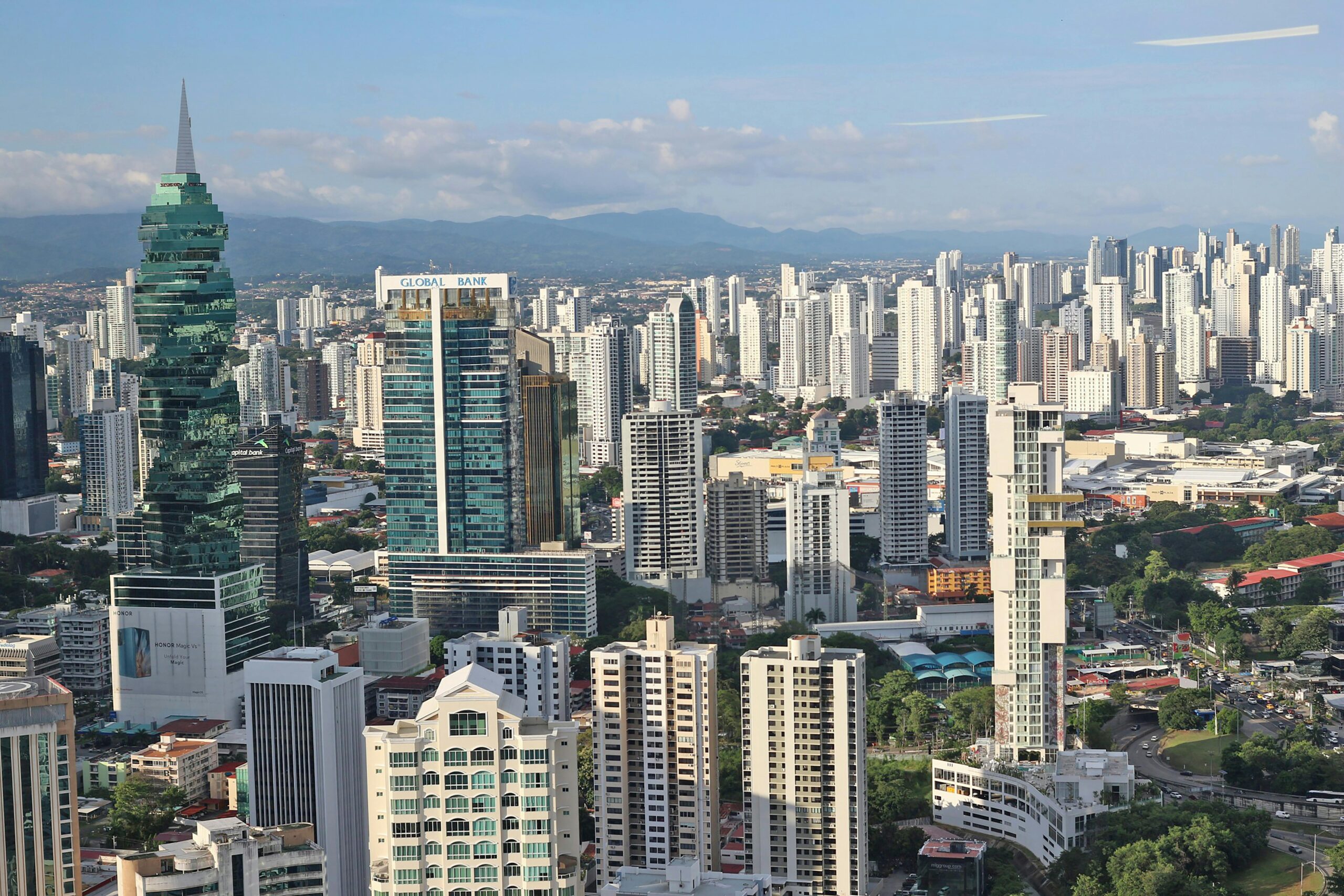
Why Panama City Is Standing Out in 2026
Panama City is no longer simply an emerging-market story. In 2026, it is recognized as one of the clearest real estate investment opportunities in the region for buyers seeking dollarized assets, strong rental fundamentals, and a residency pathway tied to property ownership.
Unlike lifestyle-first destinations that sell a beach narrative, Panama City delivers a more practical proposition: a logistics-driven economy, US-dollar pricing, a territorial tax system, and infrastructure investment already funded and underway. For investors evaluating Latin America through the lens of stability, yield, and long-term positioning, Panama City deserves serious attention.
The Core Investment Case for Panama City Real Estate
Panama’s appeal is grounded in fundamentals, not hype. The country operates the only sea-level canal between the Atlantic and Pacific, uses the US dollar as legal tender, and taxes foreign-source income under its territorial tax regime. In 2026, these advantages are being reinforced by a major public works cycle and continued canal-linked investment.
For a buyer focused on Panama City real estate investment, that creates a rare combination:
- a dollarized market
- no foreign exchange risk for US-dollar buyers
- foreign-income tax advantages
- infrastructure-led growth
- real estate entry points across multiple price bands
- a residency strategy through the Qualified Investor Visa
This is what makes Panama City different. You are not simply buying into a lifestyle market. You are buying into a functioning regional hub with durable economic relevance.
Three Catalysts Supporting Panama City Property Values
1. Metro Line 3 and the Panama Oeste Corridor
One of the biggest infrastructure stories in Panama is Metro Line 3, a 24.5 km monorail line that will connect the city to Panama Oeste via a tunnel under the canal. As of early 2026, the line was reported to be roughly 82% complete, with the elevated section over 98% complete.
Why this matters for real estate investors is simple: improved transit can reprice underappreciated corridors. Areas such as Arraiján and La Chorrera have traded at far lower price-per-square-meter levels than core bayfront districts, and better connectivity can narrow that gap over time.
2. The Fourth Bridge Over the Canal
The Fourth Bridge adds another major layer to the long-term development story. Together with Metro Line 3, it helps transform the western side of the canal from a commuter zone into a more integrated extension of Panama City’s urban footprint.
For investors, this is the type of infrastructure that can change market outlook and expand the city’s real estate map.
3. The Canal’s Long-Term Capital Plan
The Panama Canal Authority announced a roughly $8.5 billion ten-year capital plan in July 2025, including a gas pipeline, new port terminals, and the Río Indio reservoir. Canal-linked revenue continues to feed the National Treasury, which in turn supports national investment priorities.
That makes Panama’s growth story particularly compelling: the country’s core economic engine is reinvesting in itself.
Panama City Housing Trends: Stability Instead Of Volatility
A major advantage for international buyers is that Panama City’s market has traded relatively steadily in dollars. Over the past decade, residential prices rose gradually through 2019, softened in 2020–2021, and then recovered through early 2025. Year over year into January 2026, pricing was up nominally around 4%, or roughly 3% in real terms.
For many investors, that kind of stability is exactly the point.
One of the more interesting signals in the market is the widening gap between rents and prices. In 2025, Panama City apartment prices rose less than 1%, while rents reportedly increased roughly 17%. That dynamic expands the rental yield potential for buyers entering before prices fully catch up.
Panama Rental Yields by Neighborhood
Not every neighborhood serves the same buyer objective. Some areas are better for cash flow, some for capital preservation, and some for long-term lifestyle positioning. The opportunity in Panama City is that these strategies can all exist within the same metro market.
El Cangrejo: Strong Yield-to-Price Ratio
El Cangrejo is recognized as one of the strongest cash-flow plays in the city. With relatively accessible entry points and a tenant mix that includes students, expats, and professionals, it offers one of the best yield-to-price relationships in the market. Reported gross yields range from about 6.5% to 8%, with some outliers at even higher levels.
San Francisco: Balanced Yield and Liquidity
San Francisco is one of the most balanced submarkets in Panama City. It is walkable, liquid, and supported by a deep tenant pool. For investors who want solid yield potential while maintaining resale appeal, this neighborhood often strikes an attractive middle ground. Reported gross yields fall in the 6% to 7.5% range.
Costa del Este: Corporate Tenant Appeal
Costa del Este is a more capital-preservation-oriented submarket, supported by corporate tenants, relatively low vacancy, and strong resale liquidity. It tends to offer lower yields than more value-driven neighborhoods, but it provides stability and is especially relevant for buyers seeking to meet the Qualified Investor Visa threshold. Reported gross yields range from about 4% to 5.5%.
Punta Pacifica: Lifestyle and Status Premium
Punta Pacifica remains one of the city’s most recognized luxury addresses. For buyers prioritizing prestige, bayfront positioning, and branded products, it remains important. From a pure investment standpoint, however, yield is usually secondary to lifestyle. Reported gross yields are generally in the 4% to 6% range.
Santa María: Wealth Preservation
Santa Maria is more closely aligned with long-term wealth preservation than immediate cash flow. As a master-planned golf community with demand from diplomatic and executive tenants, it offers a strong lifestyle and appreciation appeal. Still, it typically yields lower than more urban, rental-driven zones.
Casco Viejo: Scarcity and Short-Term Rental Potential
Casco Viejo is a distinct asset class within Panama City. As a UNESCO heritage district with structurally limited supply, it benefits from scarcity. It is especially relevant for investors interested in short-term rental strategies, though active management and a strong understanding of regulations are important.
Panama City vs. Beach and Resort Markets
Outside Panama City, the investment profile changes. Markets like Coronado, Buenaventura, Pedasí, Bocas del Toro, Boquete, and the Pearl Islands can offer attractive gross yields or lifestyle upside, but they should be underwritten differently. These are often hospitality-driven or second-home markets with more seasonality, thinner liquidity, and greater operational complexity.
Panama City, by contrast, benefits from a more durable urban demand base tied to business travel, logistics, expat relocation, conventions, and long-term rental demand. That distinction matters. For many buyers, the best real estate investment in Panama is not necessarily the market with the highest headline yield, but the one with the most dependable tenant base and clearest exit options.
Why Demand in Panama Continues to Build
Panama closed 2025 with more than 3 million international visitors, with tourism revenue rising faster than visitor volume. That matters because it suggests the country is attracting higher-value demand, not simply more bodies.
For Panama City, that broader demand is reinforced by Tocumen International Airport, corporate travel, conventions, and the country’s position as a financial and logistics hub. This supports rental demand in key submarkets and strengthens the case for urban investment rather than purely resort-driven buying.
Qualified Investor Visa Panama: Why 2026 Matters
One of the biggest reasons to pay attention now is the Qualified Investor Visa. Under the current framework, the real estate investment threshold is $300,000 through October 15, 2026. After that date, it reverts to $500,000 unless extended.
For eligible buyers, that creates a clear and time-sensitive opportunity to secure:
- immediate permanent residency
- a lower real estate qualification threshold
- exposure to Panama’s territorial tax regime
- ownership in a dollarized real estate market
For many international investors, the visa is not the whole reason to buy, but it can be a major competitive advantage layered onto the real estate case.
Things Investors Should Still Underwrite Carefully
A serious Panama real estate investment strategy should also account for the practical caveats. HOA or PH fees can materially impact net yield. Some luxury towers may face vacancy pressure. Outside Panama City, seasonal occupancy can greatly affect returns. In areas like Bocas del Toro and some island markets, title diligence is critical.
The point is not that the opportunity is flawed. The opportunity should be modeled properly.
Representative Entry Points in Panama City
For buyers looking at current strategy tiers, the brief suggests a few useful examples:
- El Cangrejo: lower-entry, yield-oriented urban units
- San Francisco: balanced units with yield and liquidity appeal
- Costa del Este: more stable, corporate-let, QIV-eligible product
- Punta Pacifica: lifestyle-led, prestige-oriented inventory with residency relevance
These categories help frame the market by objective rather than by hype.
Final Take: Why Panama City Real Estate Deserves a Closer Look
Panama City is compelling in 2026 because it combines stability, income potential, and purposeful optionality. You have a dollarized market, a territorial tax structure, infrastructure that is already underway, and a defined residency threshold that may become less favorable after October 15, 2026.
For investors who want a Latin American real estate position with more balance-sheet logic than brochure language, Panama City stands out.
FAQ: Panama City Real Estate Investment and Residency
Is Panama City a good place to invest in real estate in 2026?
Panama City offers a strong mix of dollarized pricing, rental demand, infrastructure investment, and residency advantages, making it one of the more compelling real estate markets in the region for many international buyers.
What is the Qualified Investor Visa in Panama?
The Qualified Investor Visa is a residency pathway that allows eligible buyers to obtain permanent residency through qualifying investments, including real estate. The current real estate threshold is $300,000 through October 15, 2026, unless extended.
Which Panama City neighborhoods offer the best rental yields?
According to the brief, El Cangrejo and San Francisco stand out for stronger yield potential. At the same time, Costa del Este and Punta Pacifica are more aligned with stability, prestige, and capital preservation.
Does Panama tax foreign income?
Panama operates under a territorial tax system, which generally means foreign-source income is not taxed in Panama. Buyers should still confirm specifics with qualified legal and tax advisors.
What happens after October 15, 2026?
Under the current decree structure referenced in the brief, the Qualified Investor Visa real estate threshold will rise from $300,000 to $500,000 after October 15, 2026, unless it is extended or changed.
Discover investment opportunities in Panama City with The Agency Panama.
We can help evaluate neighborhoods, model yield scenarios, review residency-aligned options, and identify the right fit based on your investment goals.